
Loudness at 5am
Sixteen months off has left everyone's ears out of practice. A note on level, fatigue and why it rises towards dawn.
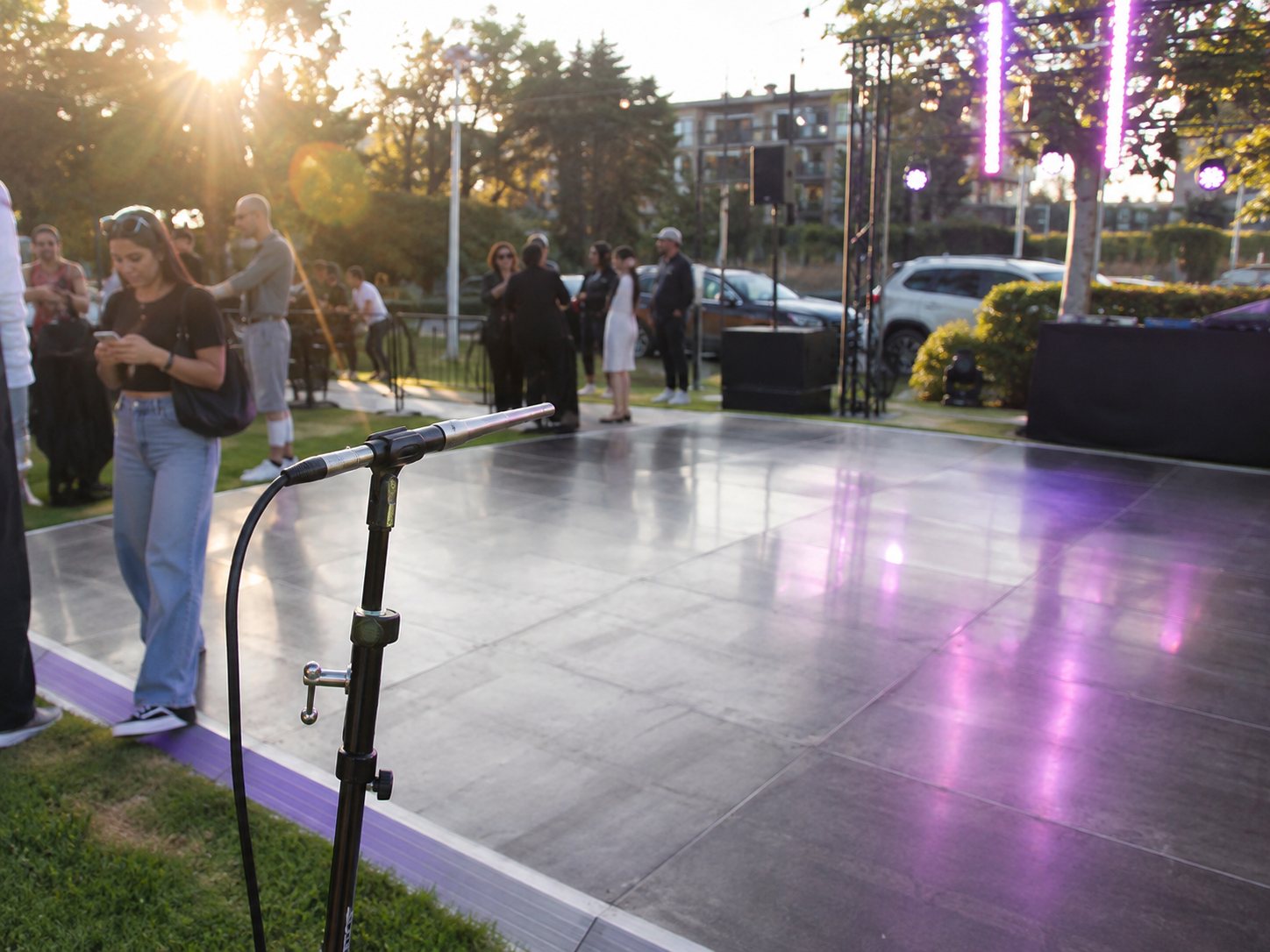
A party where nobody plays under three hours means someone on the bill is always in charge of 5am. Since the clubs reopened, at fabric, in Hamburg and in the garden at ://about blank, I have been taking a measurement mic along.
The creep
Nobody decides to turn it up. After a few hours at high level your ears protect themselves. It is called a temporary threshold shift, and it hits the upper mids first, a few kilohertz, where the detail and the hats live. The room starts to sound dull. Someone asks for more, the DJ nudges the gain, and the engineer nudges it back or does not. At one room this summer I logged 96 dB(A) at 1am and just over 101 at 5.15. Nobody I spoke to had noticed any change.
It is worse at the moment. A year and a half of living rooms has left people out of practice, and I have heard the same two complaints in three countries since July: that it is too loud, and that it should go up.
The law, as far as I understand it
The UK has no general legal limit on what an audience hears, only limits for staff and whatever a venue's licence says. Germany has a standard, DIN 15905-5, which works out at 99 dB(A) over thirty minutes. France brought in a decree in 2017 with 102 dB(A) over fifteen minutes and a separate limit on the low end. I am not a lawyer, so please check before relying on any of this. The French limit on bass matters because dB(A) weighting barely counts low frequencies, and that is where most of the energy in a house record sits.
What works
Fletcher and Munson showed in the 1930s that we hear less bass and treble at lower levels, which is why the instinct at 5am is that lower must be worse. On a decent system it does not have to be. Rex Club has more than sixty speaker points in one room, and the argument for a rig like that is that you can hear everything at a sensible level from anywhere on the floor.
Frieda Lux has a method I would recommend. Around 5am, between records, she takes the master down about 2 dB, and over the next quarter of an hour she brings back half of it. I have watched her do it four times and have not yet seen anyone notice. Ears get a rest and the room improves. Anselm Reuter leaves the level alone and lets long fades do the same job.
"If they can talk to each other at 5am, they stay till 7. If they can't, they go home with a headache and blame you." Frieda Lux
Wear plugs. I use flat-response ones at about 20 dB, and they are not expensive.